Showing posts sorted by relevance for query quantum computing. Sort by date Show all posts

Sunday, May 06, 2007

The Fabric of Reality

Back in 1997, David Deutsch, a brilliant British physicist, wrote a book that changed my view of reality by explaining the following concepts in clear prose and illustrative diagrams.

Quantum physics and its many-universes interpretation
The theory of evolution (Darwin/Dawkins)
The theory of computation (quantum computation)
The theory of knowledge (Karl Popper), explanation and understanding

The first pages describing light and how it interacts with other universes shows how the quantum world works, the section covering computing and how it relates to the other three topics opens the door to realizing that the multiverse is real and that quantum computing is nature's way of operating, something one would never realize prior to reading a book such as this. Prior to 2007, the notion of practical quantum computing becoming real was considered to be a thought experiment, something weird and wonderful and beyond the capabilities of tech but that is changing at rates that even amazes Deutch, who is considered to be the father of the QC.

Some of the events making the QC possible.
1. Stopping Light
2. Quantum Wells
3. Adiabatic Quantum Computing
4. Controllable Qubits
5. Seth Lloyd

Time to entering the Age Beyond Computation: Five/Ten years. Impact of same: Unknown.

Sunday, June 11, 2023

The art of observation ...

Rev II on the duality of existence or why do we see a consistent view of reality even though Quantum Mechanics, as seen through the lens of precise experiments, shows, without question, the Alice in Wonderland characteristics of Quantum Mechanics to be anything but deterministic. Well, because everything is entangled and decohered, observation, which collapses the wave function, driven by existence 24/7, allows us to experience reality in consistent fashion.

To whit ...

Quantum decoherence is the loss of quantum coherence, the process in which a system's behaviour changes from that which can be explained by quantum mechanics to that which can be explained by classical mechanics. In quantum mechanics, particles such as electrons are described by a wave function, a mathematical representation of the quantum state of a system; a probabilistic interpretation of the wave function is used to explain various quantum effects. As long as there exists a definite phase relation between different states, the system is said to be coherent. A definite phase relationship is necessary to perform quantum computing on quantum information encoded in quantum states. Coherence is preserved under the laws of quantum physics.

If a quantum system were perfectly isolated, it would maintain coherence indefinitely, but it would be impossible to manipulate or investigate it. If it is not perfectly isolated, for example during a measurement, coherence is shared with the environment and appears to be lost with time; a process called quantum decoherence or environmental decoherence. As a result of this process, quantum behavior is apparently lost, just as energy appears to be lost by friction in classical mechanics.


When the entanglement of a particle is experimentally created, the wonders of QM become evident.


Quantum entanglement is the phenomenon that occurs when a group of particles are generated, interact, or share spatial proximity in a way such that the quantum state of each particle of the group cannot be described independently of the state of the others, including when the particles are separated by a large distance. The topic of quantum entanglement is at the heart of the disparity between classical and quantum physics: entanglement is a primary feature of quantum mechanics not present in classical mechanics.[1]


This is why precise experiments show how coherence occurs when depicting some of the wonderful mysteries of Quantum Mechanics while decoherence hides the mysteries of same under the guise of classical. :)

Wednesday, February 04, 2026

From Analog to Digital/Rev II


Mathematically correct, extraordinarily beautiful, this works shows light is analog. When hitting the reflectors, the photons become digital for a moment, (the photoelectric effect) going back to analog after leaving the reflector, thus showing Einstein was right as was Planck and Young in proving light is both a particle and a wave depending on the circumstance said photon finds itself at any given time. When looking at this in context of the Full System Audit, this is a prime example of 137, the specific address specified in the universal routing table for light quantifying the strength of the electromagnetic interaction between elementary charged particles.


When looking at how light behaves both as wave and particle, the same phenomenon applies to particles as seen by the experiment depicted below. As per deBroglie, the matter wave rules.


When combined with entanglement, the Full System Audit begins to make sense as nature's lazy. The Principle of Least Action applies and Entanglement, the digital snapshot of analog quantum, happening at 232 Attosecond speed and decohering immediately thereafter, creates a consistent view of reality for all to see. Read below to see why this concept rings true.


As for the Universal Modeler ... Voxels are suitable for working with qubits as quantum computers, the analog hardware construct, is finally beginning to take off.


Voxels can handle qubits without restriction.


As per Full System Audit - Voxels, used in MRIs, is a way to model 3D structures (hearts, brains, etc, etc,) in ways impossible to do by any other means. For MRIs, it involves imaging slices of the organ in question and connecting the slices using lofting, The lofting connecting to the slices are voxels. Voxel generated lattices can encompass or model any arbitrary external geometry known to science. (including qubits) 3D printing also applies. 


QC2, the optical Microtubule Quantum Computer


Sunday, July 02, 2023

Beyond computation ...

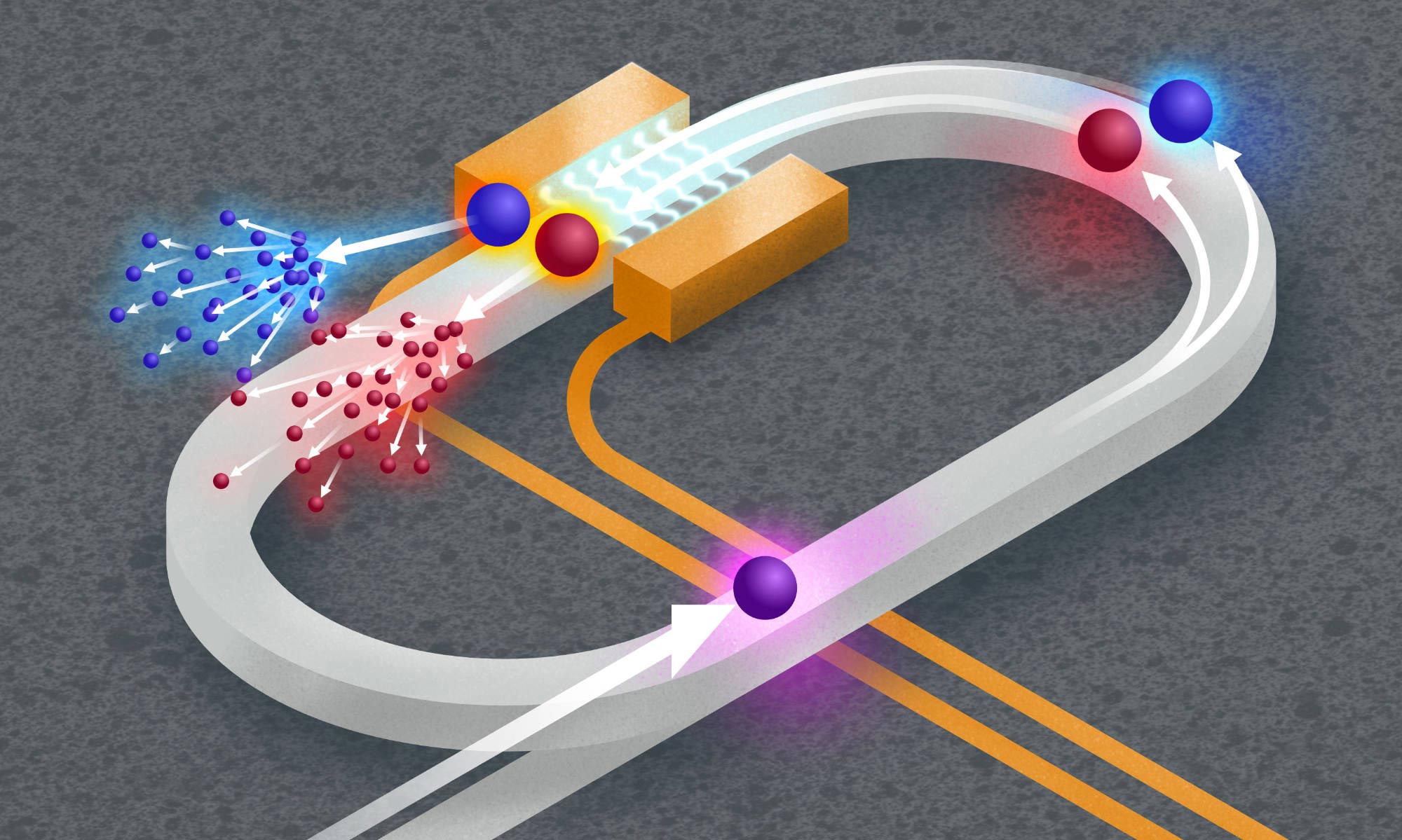
 Synthetic Space Quantum Simulator Model

A new system developed by researchers at the University of Rochester allows them to conduct quantum simulations in a synthetic space that mimics the physical world by controlling the frequency, or color, of quantum entangled photons as time elapses.
Credit: University of Rochester illustration / Michael Osadciw

Everybody talks about quantum computing from the code-breaking and factoring side of things due to the fact the compute power of said systems goes beyond computation because qubits can be 0s AND 1s at the same time, thus exponentially increasing the ability to solve difficult problems beyond the kin of serial processing via bits - 0s OR 1s, the way every non-QC system in the world crunches data. With this said, the real power of QC may be its ability to recreate reality in finite space, a concept discussed in detail by Seth Lloyd in his seminal book titled Programming the Universe.


Recreating reality was just a conjecture, until now.

Saturday, February 06, 2021

QC/Ethics/Costs ...


Everything has a cost. There ain't no such thing as a free lunch thanks to the two laws of thermodynamics, a fact BRT has bandied about for quite some time. The above clip discusses this fact regarding AI and Quantum Computing, as both are open ended and fraught with possibilities of the negative kind.

Metallurgy, steam power and the integrated circuit are just a few of the many technologies that have had a profound effect on humanity. Will quantum computing soon join this list? Some people think so and they are warning that we should begin thinking about the ethical implications of a technology that could solve problems well beyond the reach of even the most powerful quantum computers. In the above video from Quantum Daily, six leading lights in the nascent quantum computing industry discuss the issue.


TANSTAAFL, on the other hand, indicates an acknowledgement that in reality a person or a society cannot get "something for nothing". Even if something appears to be free, there is always a cost to the person or to society as a whole, although that may be a hidden cost or an externality. For example, as Heinlein has one of his characters point out, a bar offering a free lunch will likely charge more for its drinks.[8]

Same as it ever was - Talking Heads.

Friday, September 16, 2011

Music of the Spheres


The real power of quantum computing is NOT the ability to crack security codes or to search huge databases at blinding speeds, the real power of quantum computing lies in simulating reality.

"The physicists of the University of Innsbruck and the Institute for Quantum Optics and Quantum Information (IQOQI) in Innsbruck have come considerably closer to their goal to investigate complex phenomena in a model system: They have realized a digital, and therefore, universal quantum simulator in their laboratory, which can, in principle, simulate any physical system efficiently."


Back in 2008, Seth Lloyd, in his eloquent book Programming The Universe, stated the underlying reason why the scientists at Innsbruck were able to do something which, in time, could change the future of man in ways impossible to comprehend.

"Quantum computers process the information stored on individual atoms, electrons, and photons. A quantum computer is a democracy of information: every atom, electron, and photon participates equally in registering and processing information. And this fundamental democracy of information is not confined to quantum computers. All physical systems are at bottom quantum-mechanical, and all physical systems register and process information."

In indirect fashion, The Music of the Spheres seems apropos as man begins to tease information out of reality using photons and atoms just as the ancients used the motion of celestial bodies to tease out harmonic and relational aspects of nature using music as the mechanism to make it happen.

Saturday, February 05, 2022

QC's other uses ...


What's curious about quantum systems is the sole focus by the press on said tech being the end-all for breaking encryption instead of discussing why QC would also be perfect for AI-driven neural nets and ray tracing due to the inherent parallelism of qubits being in superposition to enable quantum computers to escape the limitations of serial processing forever.

For Valeria Saggio to boot up the computer in her former Vienna lab, she needed a special crystal, only as big as her fingernail. Saggio would place it gently into a small copper box, a tiny electric oven, which would heat the crystal to 77 degrees Fahrenheit. Then she would switch on a laser to bombard the crystal with a beam of photons.

This crystal, at this precise temperature, would split some of those photons into two photons. One of these would go straight to a light detector, its journey finished; the other would travel into a tiny silicon chip — a quantum computing processor. Miniature instruments on the chip could drive the photon down different paths, but ultimately there were only two outcomes: the right way, and the many wrong ways. Based on the result, her processor could choose another path and try again.

The sequence feels more Rube Goldberg than Windows, but the goal was to have a quantum computer teach itself a task: Find the right way out. For Saggio, a quantum physicist who moved to the Massachusetts Institute of Technology a few weeks ago, the project was akin to sticking a robot in a maze. The computer must learn the right path without any prior knowledge of where to turn along the way. It’s not too hard a chore — a normal classical computer could brute-force its way through dead ends and lucky guesses. But Saggio wondered, “Can quantum mechanics help?” She and her collaborators showed last year that it can.

Crucially, the chip is not just moving through faster cycles of trial-and-error, said Lucas Lamata, a quantum machine learning expert at the University of Seville. “The novelty in this paper is that they show a speedup in learning. [It’s] an important breakthrough.” Quantum mechanics makes the system learn in fewer steps. In that sense, it shows in an experiment what Temme’s theoretical speedup promised: Quantum physics can outwit — not just outrun — classical computing. 

It's all about kernels.


The story of MAGI Mathematical Applications Group Incorporated begins with the “simple” question, What paths would radiation take when a 20 megaton nuke goes off? Hypothetical target? NYC." 

MAGI was tasked to answer the question by inventing ray tracing to track the radiation paths of the nuke’s blast to the environment but also to apply the same technique to imaging as a nuke is a single energy source like a light bulb and blast and light rays propagate exactly the same but with the difference being light rays nondestructively intersect with objects and react according to the kind of characteristics the objects in question may possess like color, texture, transparency and reflectivity, using the laws of physics to generate an accurate 3D rendering of the scene in question. Computationally intense, ray tracing, and it's even more complex sibling, radiosity, are the most accurate ways to render high-resolution 3D scenes known to science. Note, in reality, rays propagate from light sources to illuminate the scene in question. 

Which means QC would be perfect for this kind of intense image creation without question.


It's only the beginning. :)

Monday, June 02, 2014

Diamonds are Forever


BRT has talked about quantum computers on several occasions as said devices are not only incomprehensively fast due to the superpostion of qubits but, more importantly, have the potential of creating reality in finite space, but before getting to that computing nirvana requires flawless quantum teleportation of information via entangled quibits, something not considered doable until now.


Seen below is a short video showing how information can be processed via quantum teleportation.


The Matrix - phase 1.

Realizing robust quantum information transfer between long-lived qubit registers is a key challenge for quantum information science and technology. Here, we demonstrate unconditional teleportation of arbitrary quantum states between diamond spin qubits separated by 3 m. We prepare the teleporter through photon-mediated heralded entanglement between two distant electron spins and subsequently encode the source qubit in a single nuclear spin. By realizing a fully deterministic Bell-state measurement combined with real-time feed-forward quantum teleportation is achieved upon each attempt with an average state fidelity exceeding the classical limit. These results establish diamond spin qubits as a prime candidate for the realization of quantum networks for quantum communication and network-based quantum computing.

Sunday, February 22, 2026

Of something eternal

Of something eternal - RM/Freepik/NanoBanana

Glass, amorphous, eternal, made from sand, perfect ... for optical computing, 

The Thermodynamic Breakthrough

Recent research into Generative Thermodynamic Computing employing noise to drive AI neural nets proves that structured data —by "jiggling" atoms— can be generated using orders of magnitude less energy than current generative AI models, a process akin to the principle of least action nature adheres to in seekking the most efficient route possible, switching between potential and kinetic energy requirements as needs warrant. 


The problem

Current systems count by 0s and 1s when moving electrons around in silicon, generating heat and requiring significant power in order to compute whereas optical computing, using glass as the substrate and combining it with analog thermodynamic computation, power requirements drops to almost nothing while photons travel at the speed of light. To make the process go even faster, quantum computing using the Penrose -Hammeroff conjecture becomes possible as QCs are analog as they measure, not count. The key is to make noise your friend, not your enemy, something todays systems fight endlessly to quench while requiring enormous amount of power to do so. Think AI data centers for example.

A conversation with Gemini

Recent 2025-2026 research confirms that microtubules can support decoherence-resistant entangled states at ambient temperatures, effectively acting as biological QED cavities. Similarly, glass nanoparticles have been "frozen" into pure quantum ground states at room temperature using optical controls, proving that glass is the ideal substrate for stable qubits. 


This analog approach of thermodynamic science validates the work of Roger Penrose and Stuart Hameroff. Their Orch-OR theory identifies the microtubule as the biological "Loom" of consciousness—a room-temperature quantum processor that has been around for four billion years.

In our cells, cytoskeletal proteins called tubulins snap onto each other to form soaring tubular arches and rails, capable of spanning entire cells, growing at one end while they fall apart at the other. These tubes, known as microtubules, form and bloom and decay in a dance that controls many aspects of eukaryotic life. They handle our chromosomes and help cells divide. They carry machines and act as tracks for motors. They push and pull cellular membranes, turning them into useful shapes.

NbRe & Majorana Stabilizers: The niobium-rhenium (NbRe) alloy, as an intrinsic triplet superconductor, is the "holy grail" for creating Majorana particles. These particles act as their own antiparticles and are "Majorana-Sighted"—they encode information in a way that is inherently protected from local noise, providing the 1% Truth required for error correction.


The Glass Sanctuary: By embedding NbRe/Majorana stabilizers within a glass substrate, we create a topological sanctuary where quantum information can reside without de-rendering into the "Analog Blur" of environmental decoherence. By leveraging  Orch-OR in glass, room temperature QC becomes possible.

Modeling the system


To map the waveguides in glass using The Universal Modeler as the entity of mathematical precision and structural persistence becomes possible through the use of CSG operators of Union, Difference, and Intersection as the scaffolding to generate increasingly smaller voxels as this eliminates the "Discretization Gap." while creating the correct Voxel-CSG coordinates needed to properly etch the microtubule structures directly into the glass. substrate.

Challenge to the titans

To the "boffins" at IBM, Intel, and Google: You have the toolkits, but you are still using silicon and electrons to compute. The science of RT QC in glass is now open for all to see.

Monday, March 24, 2025

Q Day


Ah, viable quantum computing, the long sought after holy grail, is worth pursuing no matter the cost as said tech not only goes beyond computation in terms of crunching numbers but also has the ability to model reality due to the superposition of qubits connected by entanglement, the prime driver to an existence in which we all share. With this being said, there's always a cost to everything, in this instance, privacy as QCs are uniquely qualified to deal with the issue of primes as prime numbers are the building blocks of cryptography, the mathematical construct on which privacy depends.


To whit ...


Tuesday, April 05, 2022

Criticality ...


The 1st law of thermodynamics rules as it's all about energy as said entity can neither be created or destroyed, only transformed. i.e.The flow of heat is a form of energy transfer. Heating is the natural process of moving energy to or from a system other than by work or the transfer of matter. With this being said, excess heat generated from thermodynamic processes to include erasing bits, is a killer for computers as well as being bad for the environment, a problem needing a solution now.


 Entropy also rules.


Is there a way out as the faster machines get, the hotter they get.

Possibly ...

Harnessing a particle’s velocity for computing is not an entirely new idea. Momentum computing is closely analogous to a reversible-computing concept called ballistic computing that was proposed in the 1980s: in it, information is encoded in objects or particles that move freely through the circuits under their own inertia, carrying with them some signal that is used repeatedly to enact many logical operations. If the particle interacts elastically with others, it will not lose any energy in the process. In such a device, once the ballistic bits have been “launched,” they alone power the computation without any other energy input. The computation is reversible as long as the bits continue bouncing along their trajectories. Information is only erased, and energy is only dissipated, when their states are read out.


It's all about reading out particle states using quantum computing in real time, to lessen the heat equation. Unfortunately, QC's a tech far from being practical in the year of our lord 2022 in addition to the impact Heisenberg's Uncertainty Principle may have on any given computation.

To be continued.


Sunday, June 12, 2022

Another match made in heaven ...


Yours truly has long said QCs would be perfect for ray tracing as said imaging technique lends itself to any system capable of parallel processing at high level, something QC systems do at speeds far surpassing any digital system due to the fact QCs process data using 0 & 1 at the sane time rather then 0 or 1. Now, researchers are using QC's to leverage AI driven machine learning in ways promising to develop systems of unimagined power as the tech continues to advance 24/7.