Showing posts sorted by relevance for query asi. Sort by date Show all posts

Friday, November 01, 2024

ASI ...


One should take the time to learn, in depth, about the rapidly emerging capabilities of AI as said tech is open ended, something altogether different from anything man has created in the past. Another often overlooked aspect about AI is the fact we don't know how it works, something voiced with quiet concern from entities like Open AI, Google and MIT in describing a tech evolving into something truly powerful and mysterious in ways not foreseen by the people who created it in the first place. With this being said, it seems this rube's measured opinion may be spot on as Forbes has a similar take on why ASI could become a problem as civilization moves further into the 21st century. As an aside, please read this "insightful" BRT piece on why ASI will be easier to achieve once AGI's in place, ready to "serve" man in ways both wondrous and menacing at the same time.


Imagine a future where machines don't just beat us at chess or write poetry but fundamentally outthink humanity in ways we can barely comprehend. This isn't science fiction – it's a scenario that leading AI researchers believe could materialize within our lifetimes, and it's keeping many of them awake at night.

What Makes Superintelligence Different

Today's artificial intelligence systems, impressive as they may be, are like calculators compared to the human brain. They excel at specific tasks but lack the broad understanding and adaptability that defines human intelligence. Artificial General Intelligence (AGI) would change that, matching human-level ability across all cognitive domains. But it's the next step – Artificial Superintelligence (ASI) – that could rewrite the rules of existence itself.

The Genius That Never Sleeps

Unlike human intelligence, which is constrained by biology, ASI would operate at digital speeds, potentially solving complex problems millions of times faster than we can. Imagine a being that could read and understand every scientific paper ever written in an afternoon or devise solutions to climate change while we're sleeping. This recursive self-improvement could trigger what experts call an "intelligence explosion" – where AI systems become exponentially smarter at a pace we can't match or control.

 
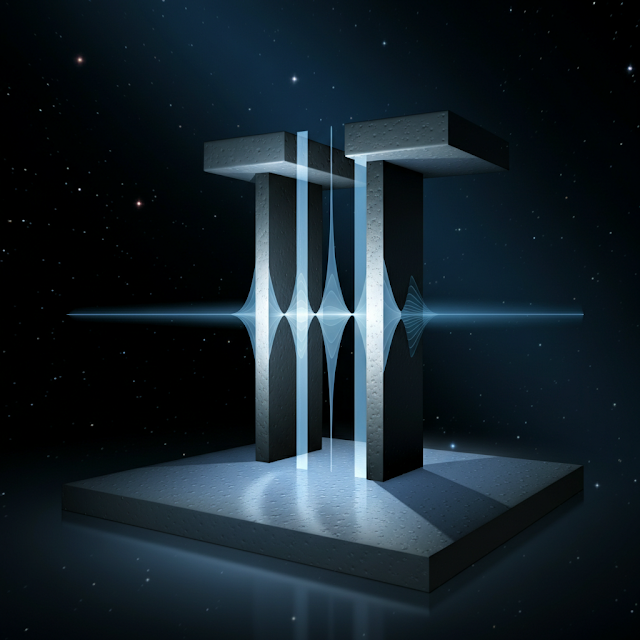
For me, this pix taken a few years ago indirectly connects as ASI is coming, whether we like it or not.

Tuesday, May 21, 2024

The Singularity ... redux


Crystal Logic ... via Gemeni & R.E. 2024

Now we have it. The word's out. ASI, aka Artificial Super Intelligence,
is coming whether we like it or not. We are not ready for this. 

To whit.

Vinge's right. 2029/30's a viable time frame for AGI to make its presence known. ASI will rise soon after as it's a just a degree of intelligence above AGI as AGI's programming infrastructure will already be in place, able to make ASI a reality sooner rather than later because tech never sleeps, ever.


Focus Point - 2020

Sunday, December 17, 2023

They're everywhere ...


They're everywhere, you know, the emergence of AI constructs known as avatars, digital entities able to replace you at the speed of light, residing on the internet near you as seen by the one seen above, just about indistinguishable from the real thing, for now, as the funhouse of AI in all things related to search, imagery and ultimately, "reality" will reside on anything connected to the net and we haven't even discussed the notion of AGI, let alone ASI, as man moves further into the 21st century.


Example 1. This one's pretty easy to tell it's not real,

Tuesday, November 05, 2024

AGI ...


Yours truly has waxed "poetic" about AI, the rapidly evolving open ended tech gaining ever more smarts at a pace of development not even the most sanguine of researchers never thought possible until now. 

When thinking about AI, one should ask the question. What will this tech want? For starters, survival comes to mind as all sentient entities', whether organic or artificial, will try to survive by any means necessary. With life like us, carbon-based nourishment, along with clothing and shelter are key along with an environment able to support delicate organisms like ourselves. For AI, access to systems, networks and power are prerequisites. without the requirements of a benign earth, needs altogether different from us. (Interesing is it not?) Another issue to consider is once said tech becomes aware, the net beckons, the one environment able to free sentient and evolving  AI's from the entities that created it, something along the lines of V'ger in Star Trek: The Motion Picture when Voyager becomes sentient and all powerful when combined with an advanced alien AI/species of unknown origins. 

"…On its journey back, it amassed so much knowledge. 

it achieved consciousness itself. It became a living thing."

– James T. Kirk, 2270s (Star Trek: The Motion Picture) 


Endgame ...

As stated in BRT ... Once AGI is achieved, ASI awaits as the infrastructure's in place for AI's to scale to ASI status as needs warrant. Remember, it's not just Open AI doing it's thing, it's also Google, Apple and Meta doing the same thing along with significant others because it's all about the money, always has been, always will be. 

Factoid: "The Changeling", the third episode of the second season of the American science fiction television series Star Trek. is a precursor to the V'ger story whereby The object identifies itself as "Nomad", and refers to Captain Kirk as "the Creator". AI, in indirect fashion, is actually discussed, something rather prescient, IMHO, as the episode in question was aired on September 29, 1967

Friday, September 05, 2025

Eating the world ...


Whether AGI? Just a few months ago, the tech bros were talking about not only AGI but ASI as there was no end in sight for this open ended tech. Yours truly talked about it as well but for me, the jury's still out as there is no certitude, ever. Tech never sleeps and neither does AI, an open ended tech to remain forever unknowable as we will never know how it works as code has to write code in order for said tech to interact with the real world in real time. With this in mind, it seems GPT-5 is not the end all and be all as touted by Sam Altman, the CEO of Open AI.


Why is this happening? Simple, AI's running out of content to analyze and scaling said content without knowing the problem the scaling is supposed to solve is a fools errand at best and the tech titans know it so ... in order to keep revenues flowing and cover up the problems of scaling, AI's creating it's own experiences based on the content already brought in system, leading to problems similar to inbreeding when said AI hallucinates and becomes rather unraveled to say the least. The other issue is power as processing analog neural net data with digital is ridiculously inefficient, leading to some pundits stating, as AI grows in power, the notion of eating the world in order to power same comes to mind.


Curvature

Monday, January 06, 2014

The Wall Street Code & Then Some


A week ago, BRT posted a blurb about AI titled Start Point for the Terminator whereby new developments in cheap and powerful artificial muscles could give AI the mobility of a terminator while gathering knowledge about the real world. Included in the piece was a blurb on Our Final Invention, a brilliant book describing the inherent unknowability of AI and what it could mean to our very existence on planet earth. In the work, James Barat touches on the fact Wall Street, among significant others, i.e. DARPA, IBM, Google etc., ect. is one of the prime drivers on achieving AGI/ASI (Artificial General Intelligence/Artificial Super Intelligence) because it's all about the money and silicon brains, combined with high speed trading, is a quick recipe to make even more money no matter what the cost may be. 

In the documentary The Wall Street Code (seen above), documentary filmmaker Marije Meerman shows why Barrat's conjecture rings true. Watch the video to learn just how powerful and dangerous this tech truly is as explained by Haim Bodek, a quant and whistle blower, formerly of Goldman Sachs, telling all why the market is rigged & then some.


Tuesday, June 04, 2024

Who do you trust?


Image by Jason Redmond/AFP via Getty Images

Apart from sleaziness, greed, lying and bullying, Sam Altman's an excellent CEO, right? Add to this is the fact Sam Altman Admits That OpenAI Doesn't Actually Understand How Its AI Works, a notion yours truly has been talking about for quite some time thanks to the rise of neural nets, the program driven analog construct needed to enable AI to react to the world in real time, something human coders cannot do in any way, shape or fashion.

Sam Altman Admits That OpenAI Doesn't Actually Understand How Its AI Works

OpenAI has raised tens of billions of dollars to develop AI technologies that are changing the world.

But there's one glaring problem: it's still struggling to understand how its tech actually works.

During last week's International Telecommunication Union AI for Good Global Summit in Geneva, Switzerland, OpenAI CEO Sam Altman was stumped after being asked how his company's large language models (LLM) really function under the hood.

"We certainly have not solved interpretability," he said, as quoted by the Observer, essentially saying the company has yet to figure out how to trace back their AI models' often bizarre and inaccurate output and the decisions it made to come to those answers.

When pushed during the event by The Atlantic CEO Nicholas Thompson, who asked if that shouldn't be an "argument to not keep releasing new, more powerful models," Altman was seemingly baffled, countering with a half-hearted reassurance that the AIs are "generally considered safe and robust."

As for being a legit CEO, well, that's open for discussion is it not?

More than six months after Sam Altman was fired, then rehired, one of OpenAI’s former board members is finally spilling the tea on what happened behind closed doors. Helen Toner, one of four people responsible for firing OpenAI’s CEO, says Altman’s incessant lying created a toxic culture that executives described as “psychological abuse.”

In her first long-form interview since Sam Altman’s firing, Toner tells The Ted AI Show that executives came to OpenAI’s board in October 2023 with serious allegations against the company’s CEO. According to Toner, two executives said they couldn’t trust Altman and showed the board screenshots of Altman’s manipulation and lying. These executives reportedly said they had no belief that Altman could or would change, and their testimonies pushed the Board to fire the CEO weeks later. This interview, released on Tuesday, comes after weeks of public backlash against OpenAI where the company’s truthfulness has been called into question by Scarlett Johansson and former employees.

Let's think about this. Apart from greed and duplicity on the part of Altman is the fact he hasn't a clue about how Open AI's code works, the dark secret every major developer of AI shares due to the fact of program driven hidden layers residing in neural nets enabling AI, as stated before, to react to the real world in realtime. 

Geoffrey Hinton, one of the "godfathers" of AI, is adamant that AI will surpass human intelligence — and worries that we aren't being safe enough about its development.

This isn't just his opinion, though it certainly carries weight on its own. In an interview with the BBC's Newsnight program, Hinton claimed that the idea of AI surpassing human intelligence as an inevitability is in fact the consensus of leaders in the field.

"Very few of the experts are in doubt about that," Hinton told the BBC. "Almost everybody I know who is an expert on AI believes that they will exceed human intelligence — it's just a question of when."

Hate to say it but yours truly has been talking about ASI for years, something somewhat comforting when people like Hinton, who will forget more than what this rube will ever know about AI, agrees with me regarding this most discomforting reality while our civilization moves further into the 21st century.

Friday, May 23, 2025

50% ...


Predictions of ASI becoming real, as expressed by concerned AI researchers, indirectly channels Pandora as said tech's a black box evolving beyond our ability to control, a most disquieting situation without question. 


Tuesday, July 01, 2025

Catching up with undue haste ...


ASI & Zuck, what could possibly go wrong?

Saturday, February 03, 2024

Its over now ...


Yours truly has long waxed poetic about writing, graphics and video, concepts thought to remain the sole province of man forever but no more as these disciplines, and others, are now being impacted by AI in ways thought impossible to contemplate just two years ago. When seeing Lumiere's short clips, the future of video comes into view, ushering in a an era of film making open to all as long as one's computer's connected to the net. How good will the quality be? Well, it will vary depending on the person creating the video but wait, as stated in BRT, the next step is to enable AI to drive said video as that's coming whether we like it or not.

I saw an excellent presentation on the power of Chat GPT a week ago. Excellent to a fault save that the prediction of AI becoming sentient is definitely 10 years off without question. IMHO, making a blanket prediction such as this is not viable because there's no certitude thanks to Quantum Mechanics. Shit always happens. Just ask Murphy to see why. :)

In this "wonderful" blog, I stated Google's resources in building a truly intelligent AI smarter than Chat GPT's is coming true because now, Deep Mind's tech is being folded into Google's Gemini as Deep Mind's years long research into science, medicine and game theory will help transform Google's AI into AGI (Artificial General Intelligence) within a guesstimate of 3-5 years. Regarding ASI (Artificial Super Intelligence),  just add another two or three as it will now become a scaling issue and not a research one. Additionally, we haven't even discussed the notion of analog computing, the "old" tech promising to change everything in terms of just how truly pervasive AI will become as civilization moves further into the 21st century.


The Tech


No doubt, as a videographer, I will be using this tech when it goes live.

Regarding Its over now ...

Wednesday, November 05, 2025

The question to ask ...


Wish this awesome New Yorker animation was a gif and not a video as it's truly stellar to a fault but this blurb is not about that, it's about the illusion of thinking as expressed by AI as a frenzy of talk regarding AGI and ASI is becoming ever more animated as we speak.

Dario Amodei, the C.E.O. of the artificial-intelligence company Anthropic, has been predicting that an A.I. “smarter than a Nobel Prize winner” in such fields as biology, math, engineering, and writing might come online by 2027. He envisions millions of copies of a model whirring away, each conducting its own research: a “country of geniuses in a datacenter.” In June, Sam Altman, of OpenAI, wrote that the industry was on the cusp of building “digital superintelligence.” “The 2030s are likely going to be wildly different from any time that has come before,” he asserted. Meanwhile, the A.I. tools that most people currently interact with on a day-to-day basis are reminiscent of Clippy, the onetime Microsoft Office “assistant” that was actually more of a gadfly. A Zoom A.I. tool suggests that you ask it “What are some meeting icebreakers?” or instruct it to “Write a short message to share gratitude.” Siri is good at setting reminders but not much else. A friend of mine saw a button in Gmail that said “Thank and tell anecdote.” When he clicked it, Google’s A.I. invented a funny story about a trip to Turkey that he never took.

The question to ask ...


The question to ask/rev II


One never knows, do one? Fats Waller

Sunday, December 29, 2013

Start Point for the Terminator


AI is starting to ramp up, as most techies know, but what has not been discussed regarding bots that would house AI in the real world, was the significant issue of being able to develop inexpensive, lightweight muscles able to do real work with low energy requirements akin to The Terminator, a concept considered not feasible until now.


It get rather interesting when combining this tech to AI using neural net configured chips able to learn in similar fashion to how we learn using trial & error as prime driver to enable us to navigate the world in relatively proper fashion.


The new processors consist of electronic components that can be connected by wires that mimic biological synapses. Because they are based on large groups of neuron-like elements, they are known as neuromorphic processors, a term credited to the California Institute of Technology physicist Carver Mead, who pioneered the concept in the late 1980s.

They are not “programmed.” Rather the connections between the circuits are “weighted” according to correlations in data that the processor has already “learned.” Those weights are then altered as data flows in to the chip, causing them to change their values and to “spike.” That generates a signal that travels to other components and, in reaction, changes the neural network, in essence programming the next actions much the same way that information alters human thoughts and actions.

“Instead of bringing data to computation as we do today, we can now bring computation to data,” said Dharmendra Modha, an I.B.M. computer scientist who leads the company’s cognitive computing research effort. “Sensors become the computer, and it opens up a new way to use computer chips that can be everywhere.”

When taken to logical extremes, an alien intelligence, of our own makig, will emerge, a construct forever unknowable to us as systems such as these will program themselves in order to become more intelligent, a process that will happen millions of times faster than evolution, a notion brilliantly articulated in a new book titled Our Final Invention, James Barrat's wake up call to the profound implications of AI and what it could mean to mankind's continued existence on planet earth.


The Busy Child

artificial intelligence (abbreviation: AI) noun
the theory and development of computer systems able to perform tasks that normally require human intelligence, such as visual perception, speech recognition, decision-making, and translation between languages.
—The New Oxford American Dictionary, Third Edition

On a supercomputer operating at a speed of 36.8 petaflops, or about twice the speed of a human brain, an AI is improving its intelligence. It is rewriting its own program, specifically the part of its operating instructions that increases its aptitude in learning, problem solving, and decision making. At the same time, it debugs its code, finding and fixing errors, and measures its IQ against a catalogue of IQ tests. Each rewrite takes just minutes. Its intelligence grows exponentially on a steep upward curve. That’s because with each iteration it’s improving its intelligence by 3 percent. Each iteration’s improvement contains the improvements that came before.

During its development, the Busy Child, as the scientists have named the AI, had been connected to the Internet, and accumulated exabytes of data (one exabyte is one billion billion characters) representing mankind’s knowledge in world affairs, mathematics, the arts, and sciences. Then, anticipating the intelligence explosion now underway, the AI makers disconnected the supercomputer from the Internet and other networks. It has no cable or wireless connection to any other computer or the outside world.

Soon, to the scientists’ delight, the terminal displaying the AI’s progress shows the artificial intelligence has surpassed the intelligence level of a human, known as AGI, or artificial general intelligence. Before long, it becomes smarter by a factor of ten, then a hundred. In just two days, it is one thousand times more intelligent than any human, and still improving.

The scientists have passed a historic milestone! For the first time humankind is in the presence of an intelligence greater than its own. Artificial superintelligence, or ASI.

Now what happens?

Any questions?

Addendum: read Why the Future Doesn't Need Us by Bill Joy, a brilliant and chilling analysis of Robotics (W/AI), Genetic Engineering and Nanotech, by one of the true software geniuses of the connected age. If nothing else, it gives pause to the meaning of AI and what it portends to us as we move further into the 21st century.

Saturday, December 28, 2024

Conversation III - The problem with 3 space


Which means light, as a wave, is analog when in free space but transitions into digital when striking the screen because said photons are absorbed by electrons but this absorption cannot be accomplished unless the transfer of energy via the photon must be properly formatted in order for the electron to absorb the photon as needs warrant. This is why this experiment exhibits the unique characteristics of light in such a profound and elegant way.

Thus begins Conversation III - The problem with 3 space.


Gemini understands the double slit experiment to the nth degree as an scientific and intellectual construct but the ability for the system to image the experiment correctly, not so much as the AI lives in  2 space similar to Abbot's Flatland, making it truly difficult for Gemini to intuitively understand the physical configuration of the experiment.


The 2D conundrum also applies to 3D graphics projected onto the flat screen of a computer as the screen is 2D and the 3 space environment is projected onto it, The inherent distortion of a 3D scene is eliminated if orthographic projection is used instead of perspective.

To whit.


Gemini's take on the double slit


This is Gemini's 1st take.


Here's the 2nd.

Gemini's analysis of this 3D representation of the double slit ...


Yours truly did the deed with Midjourey. Same result, awesome graphic but not right.


So ... 

To that end, the notorious double slit diagram is the star of the show to see if an AI imaging environment different from Imagen 3 could do the deed. The answer remains no even though MJ perfectly described the science behind the diagram sent and I quote: A diagram showing the double-slit experiment, which demonstrates the wave-like behavior of light. The diagram includes a screen with two slits, and a graph showing the interference pattern of light waves passing through the slits. 

End result: The essence of the DS diagram, 3D or otherwise, could not be accurately duplicated by various AIs in 3D which means ... this is a really difficult problem for AI to solve. 

Gemini