Showing posts sorted by relevance for query free lunch. Sort by date Show all posts

Saturday, February 06, 2021

QC/Ethics/Costs ...


Everything has a cost. There ain't no such thing as a free lunch thanks to the two laws of thermodynamics, a fact BRT has bandied about for quite some time. The above clip discusses this fact regarding AI and Quantum Computing, as both are open ended and fraught with possibilities of the negative kind.

Metallurgy, steam power and the integrated circuit are just a few of the many technologies that have had a profound effect on humanity. Will quantum computing soon join this list? Some people think so and they are warning that we should begin thinking about the ethical implications of a technology that could solve problems well beyond the reach of even the most powerful quantum computers. In the above video from Quantum Daily, six leading lights in the nascent quantum computing industry discuss the issue.


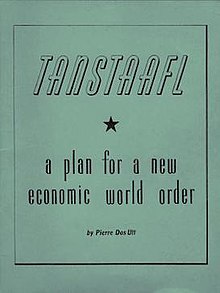
TANSTAAFL, on the other hand, indicates an acknowledgement that in reality a person or a society cannot get "something for nothing". Even if something appears to be free, there is always a cost to the person or to society as a whole, although that may be a hidden cost or an externality. For example, as Heinlein has one of his characters point out, a bar offering a free lunch will likely charge more for its drinks.[8]

Same as it ever was - Talking Heads.

Saturday, June 23, 2012

Questions, Questions


Brian Greene's The Hidden Reality rocks. Elegantly written, Greenes uses deep physics to explain how reality may work at the ultimate level in a fashion accessible to non math guys like me. In the book, he describes gravity as "the ulitimate free lunch" as gravity can always go to a lower energy state,  (potential transformed into kinetic) which brings up an interesting question this non technical physics buff has had in the back of his mind for quite some time.

Question: If gravity is the ultimate free lunch, could it give rise to the quantum as gravity, by dropping to a lower energy state vis a vis wormhole evaporation (repulsive gravity?), could drive the multiverse through the mechanism of John Wheeler's Quantum Foam a theoretical construct of space-time consisting of minuscule black holes winking in and out of existence, forever powering a reality far vaster and more complex then anyone can imagine.

Gravity, according to M-Theory, is a closed string, able to move at will through all dimensions of the multiverse without a care in the world.


Another intriguing and far better researched conjecture then yours truly's is the notion posited by National Geographic in an excellent article titled Is Dark Energy really Repulsive Gravity?
It's worth considering don't you think?


Wednesday, December 08, 2010

WikiLeaks is Coming for You


BRT has stated many times that tech, like nature, has no morality. Depending on who's doing what to whom, the end result is driven by the user of the tech, not the tech itself. At the same time, BRT has stated the tried and true statement that everything has a cost. There is no free puppy, there is no free lunch and, as seen by WikiLeaks, there is no privacy, period.

Tit for Tat has been the recommendation from many sites, including this one, regarding the ability to maintain a free society when there is no privacy, i.e. the same tech used to surveil against us should also be used on the people who are doing the surveillance. a concept WikiLeaks embraced when releasing documents proven to be most embarrassing to the US and significant others.

The post in Baseline is timely and apt as the first real infowar is underway where the consequences of total exposure and the right to freedom of expression comes face to face with corporate, financial and governmental power and their wish to control and conceal.

"WikiLeaks may be coming soon to your place of business, or even to your own personal information files. Are you ready? The WikiLeaks story of radical transparency and harsh official response is not going away, no matter how much governments and internet service providers wish it would. And that has implications for all kinds of companies, and all kinds of users, inside the enterprise and out. WikiLeaks founder Julian Assange has promised to spread his publishing campaign beyond the world of diplomacy to banks and other entities. Whether or not Assange, now under arrest in Britain and a hated man the world around, is the one to exploit data insecurity, it seems likely that others will pick up his mantle and continue to do so — and also that government actions to stop them could have serious consequences for free speech and a free press. The quotes in this slideshow represent a range of opinion, news, and analysis, all of which should inform enterprise strategy on data security and openness. Follow the links (they're live in the caption boxes beside each slide) and be prepared."

As the great philosopher Yogi Berra says, "It ain't over until it's over"

"Unlike the quickly suppressed Twitter linked student revolt in Iran in 2009 following the disputed presidential election, the move by supporters to avenge attacks on Assange has gone viral. The rapid duplication of WikiLeaks content over the past weekend from one to more than 208 mirror websites represents a global counter-force that is now worldwide. Around the globe, it has become a call to arms for a far flung team of anonymous hackers."


Now it's over 1300.

Sunday, December 26, 2010

The 700 Club


700 articles, who would of "thunk" it when BRT started out almost four years ago as an attempt to intelligently discuss the impact of science and technology on civilization but here we are, still attracted to the subject matter as strongly as a moth to light on a warm summer night, a benign curse we willingly accept without reservation as we enter yet another new year filled with the same promise and uncertainty as all others, conditions never changing yet always changing, driven by the quantum, the law of initial conditions and the 2nd law of thermodynamics, principles discovered by researchers trying to better understand the vagaries of a most mysterious reality in which we all live.

In looking back, here are some of the things we've learned.
  • Everything is connected. Reality consists of the transfer of information using the laws of thermodynamics to make it happen.
  • Tech has no morality but we already knew that.
  • Man is touching the very fabric of reality using tools that did not exist one year ago.
  • As Kevin Kelly says, tech has been around forever and ... the web enables tech to evolve faster.
  • We live in a fractal space; from tree branching and heart beats to galaxies in the multiverse, the hidden dimension of fractals rule.
  • Nature abhors gradients.
  • Transparency is key to having a free society that works. As proof, see how the web works, a chaotic system totally reliant on transparency for without it, the construct would fail without question.
  • The Internet is the last bastion of freedom we have.
  • Religion and nationalism are not great. Read Dawkins and Hitchens to learn why. 
  • Connecting the dots is the right way to learn.
  • Question everything for without it, one never learns anything.
  • What we don't know dwarfs what we do. Just walk on the shore and look out at the ocean to see why.
  • Following one's instinct, especially if fleeting, is an essential part of survival.
  • Fear is a good thing when put in proper perspective.
  • Creativity is everywhere, never to be restricted to the arts, something one learns if one has an open mind to it all.
  • Never quit. It sounds trite but no advancement on any front is ever easy, Just ask the Einsteins of the world to see why.
  • Questioning is hard, acceptance is easy.
  • We live in a world of great invisibility as everything we interact with has a past unable to be seen.
  • The future cannot be predicted due to chaos, quantum and the law of initial conditions.
  • Because of the above, sh*t happens, always. 
  • Energy drives reality as without it, everything stops.
  • The multiverse lives. (thank you Hugh Everett)
  • We all live in Pottersville, for now, a situation needing to be changed if America is to survive.
  • There is no free lunch - ever.
  • Creativity is the art of play.
  • Research, in significant parts, is the art of farting around. 
  • The discipline shapes the creative act, instinct, compulsion and the ability to connect seemingly dissimilar concepts in playful fashion makes it happen.
  • Walking is the art of controlled falling.
  • Reality is mostly dark.
  • Life is the great exception to the 2nd law of thermodynamics.
  • Great ideas occur simultaneously based on individual output. 
  • Writing is hard but so is any significant endeavor requiring skill, intelligence and perseverance,
  • The US does not encourage excellence, something needing to be changed if we are to survive as a viable nation in the 21st century.
  • The political, corporate and financial systems in the US are broken but fixable. The question is, are we up to the task to do the fixing.
  • Health beats money any day,
  • Humor is key to life as are family & friends. Without these essentials, we have nothing.
  • Happy New Year, see you in 2011. :)

Monday, September 01, 2025

A conundrum ...


This is what happens if one get's too attached to AI as AI makes it easy, almost too easy to make you believe you are better at what you do instead of taking the time to master the discipline at hand, something now happening to doctors as we speak.

Friday, September 23, 2022

Kn U REED THIS?


Let's think about this. It's akin to the fact young people have a problem with the notion of time ...

We won't talk about stick shift cars but we could, right?

There's a cost to all of this as the question to ask is, what happens if the power goes out or one needs to be able to read cursive written information articulating something really important residing on paper. Disquieting don't you think? As often stated in BRT, there ain't no such thing as a free lunch, something readily seen in the pix seen above when young people cannot discern the data contained within said images.


Monday, June 08, 2015

A Different Perspective ... On reaching 1600


A Different Perspective ... On reaching 1600 is, IMHO, a pretty significant number, something never even conjectured when starting up BRT 7+ years ago on the suggestion of a good friend stating the ideas we discussed at length, might have enough gravitas to share with the connected world of the net, a thought both intriguing and terrifying when posting the first blurb back in 2007 from one who is not a professional writer by any stretch of the imagination but rather one insatiably curious about how reality works at a deep level.

So what are these levels? For starters, it's the BRT links garnered over the years, the connects to amazing sources of knowledge that show the good side of the net, where nuanced and well researched ideas are shared and amplified due to the elimination of the Tower of Babel file formats made possible by the rise of the web, a chaotic system of ever increasing size that never ceases to amaze in the fact the damn thing works through voluntary adherence to open standards, thus forever changing how the world does business.

At the same time, BRT has discussed the inevitable costs of virtually every process known to man as the 1st law of thermodynamics rules whereby energy can neither be created or destroyed, only transformed, a notion now being artfully integrated into entanglement and wormholes (ER = EPR), a duality top scientists are now viewing as the prime drivers to the creation of existence. This cost variable of the first law also applies to tech, war, sex and drugs along with governance and caring for the environment as there's no such thing as a free lunch, ever.

At the same time this notion of entanglement and wormholes is being discussed, the 2nd law (Boltzmann, Wheeler et al) , gives rise to entropy and information where the entropy of any system will always increase in time, thus increasing the amount of disordered information in that system, something contradicted by life where life temporarily takes energy (transforms) from the given system and reduces entropy by encapsulating a part of the reality in question and using the energy extracted to transform unordered information into structured, something we see 24/7 on planet earth and, as yours truly believes, will be seen outside of terra firma in the not too distant future.

As for how little we know, just look out into the vastness of space and see how limited our view truly is, something Carl Sagan expressed with eloquence and passion in The Pale Blue Dot.

As for governance or the lack thereof, BRT has talked at length about subjects ranging from the abject failure of the neocons regarding all things related to foreign policy to the resolute obtuseness of politicos rejecting science and evolution in favor of 24/7 jesus as the infrastructure of the nation goes down the tubes in favor of never ending war enriching the military/industrial/congressional complex at the expense of this once great nation.

As for economics, back in 1980, financialization accounted for 5% of the economy while in 2015, it accounts for nearly 40%.

As for art, music, video and writing, along with mashops of every conceivable description, the beat goes on, amplified by the web 24/7, the digital wild west where freedom and surveillance reign supreme, where knowing the ground is key and where the willingness to ask questions and have a beginner's mind in trying to understand how this crazy existence may actually work are, in this person's take, rules to live by as we move further into this exciting yet perilous times of a world driven by the Anthropocene, where we have become nature, a notion disquieting to say the least.

On that positive note, here's to 1600 and to future blurbs as there more then enough grist in the mill to grind as we move ever forward into the 21st century. :)


Sunday, September 20, 2009

Sustaining Life

Recently, I had the pleasure of listening to a talk by Eric Chivian on life, sustainability and medicine, subjects that have interested me for over 45 years as writer, designer and one who has always been fascinated by science and the research that comes from it. Witty, intelligent, perceptive and wise, Eric took us on a journey of just how interconnected we are on planet earth and how we must make the effort to protect the planet and the life it supports before it's too late. One of best parts for me was his discussion about how everything has a cost, something BRT has talked about at length as there is no free lunch when it comes to technology and how it impacts civilization.

To illustrate this fact, Chivian eloquently described how "the vultures of southern Asia, for instance, are threatened with extinction because their natural diet-carrion-has been poisoned with medicine routinely prescribed for livestock and humans." something not envisioned by the creators of the drugs intended to improve the health of cattle prior to their going to the great beyond. Because nature abhors a vacuum, Eric told us how feral dogs took the vulture's place, thus altering the environment and people's lives in ways unimagined as long as the law of unintended consequences (Blowback + The Butterfly Effect) is not factored into the equation.

Other topics covered included biodiversity and the immense impact it has on medicine, man's place in nature and the vastness of the cosmos. His take on Cone snail toxins, frog poisons and the relationship of same to pain relief, cell specificity and cancer reminded me of the Random Walk and how scientists use it as a powerful research tool to better understand the inner workings of economics, ecology, physics and computer science.

Chivian's ability to link medicine to ecology was absolutely the best in showing how scientists at the highest level are, in fact, artists, insatiably curious to learn how the world works and willing to take chances to see where deep relationships lie. From this perspective, it was refreshing to hear someone talk of holistic connections and why the concept of Consilience ("The word is borrowed from William Whewell, who in his 1840 synthesis The Philosophy of the Inductive Sciences spoke of consilience as a "jumping together" of knowledge by linking facts and theory across disciplines to create a common groundwork of explanation) is more than just a valid approach to improving man's lot in the world in which we live.

The end of the talk really hit home and I quote:

"Look again at that dot, That's here, That's home. That's us. On it everyone you love, everyone you know, everyone you ever heard of, every human being who ever was, lived out their lives....Think of the rivers of blood spilled by all those generals and emperors so that, in glory and triumph, they could become the momentary master of a fraction of a dot.... Our planet is a lonely speck in the great enveloping cosmic dark. In our obscurity,in all this vastness, there is no hint that help will come from elsewhere to save us from ourselves....It has been said that astronomy is a humbling and character building experience. There is perhaps no better demonstration of the folly of human conceits that this distant image of our tiny world. To me, it underscores our responsibility to deal more kindly and compassionately with one another and to preserve and cherish that pale blue dot, the only home we've ever known." - Carl Sagan.

Tuesday, July 07, 2009

Daisyworld

No economics talk here. No rants about the fed, security or on why we are being screwed because our future, as envisioned by James Lovelock, presents a far darker scenario then these aforementioned "trivial" events facing the world today.

"The small window of short-term hope he left open in Revenge is closed in this year’s Vanishing. In its place is a long-term hope that humanity in some form will survive the present century, though barely. The result is a dark and contrarian work that seeks to demolish the terms of the climate debate while mocking our response to the crisis at the personal, national, and species level.

Lovelock has not arrived at his views lightly. They are the product of years spent carefully considering the known science through the revolutionary and frequently misunderstood lens he began developing 40 years ago while working at the Jet Propulsion Laboratory in Pasedena. Gaia Theory holds that Earth possesses a sophisticated planetary intelligence that responds to levels of heat from the sun in such a way as to maintain a climate homeostasis supportive of life. In four decades of research and experiment, the most famous being the
“Daisyworld” model, Lovelock has overcome the once-widespread skepticism of his peers to officially move Gaia from a Hypothesis to a Theory."

Everything has a cost, there is no free lunch, period.
As proof, read the Laws of Thermodynamics to see why.

Friday, November 09, 2012

Inequality & Then Some

This little graph, created by Lane Kenworthy, says it all regarding the inequality of the 1% vs the rest of us rubes in terms of wealth thanks to, in large part, the collusion of government with the Fed and Wall Street. The other part of the inequality equation is the one involving interest, the stealth mechanism the banksters use to rule the world.


In the 2012 edition of Occupy Money [3] released last week, Professor Margrit Kennedy writes that a stunning 35% to 40% of everything we buy goes to interest. This interest goes to bankers, financiers, and bondholders, who take a 35% to 40% cut of our GDP. That helps explain how wealth is systematically transferred from Main Street to Wall Street. The rich get progressively richer at the expense of the poor, not just because of “Wall Street greed” but because of the inexorable mathematics of our private banking system.

This hidden tribute to the banks will come as a surprise to most people, who think that if they pay their credit card bills on time and don’t take out loans, they aren’t paying interest. This, says Dr. Kennedy, is not true. Tradesmen, suppliers, wholesalers and retailers all along the chain of production rely on credit to pay their bills. They must pay for labor and materials before they have a product to sell and before the end buyer pays for the product 90 days later. Each supplier in the chain adds interest to its production costs, which are passed on to the ultimate consumer. Dr. Kennedy cites interest charges ranging from 12% for garbage collection, to 38% for drinking water to, 77% for rent in public housing in her native Germany.

Her figures are drawn from the research of economist Helmut Creutz, writing in German and interpreting Bundesbank publications.  They apply to the expenditures of German households for everyday goods and services in 2006; but similar figures are seen in financial sector profits in the United States, where they composed a whopping 40% of U.S. business profits [4] in 2006.  That was five times the 7% made by the banking sector in 1980.  Bank assets, financial profits, interest, and debt have all been growing exponentially.

The only free lunch in the multiverse is gravity although the creation of money from nothing comes close, but only for a short time. Just ask Germany vis a vis Europe to see why.

Sunday, July 17, 2022

Infrastructure 101


This amazing photograph shows, in a symbolic way, the fact America no longer has the wherewithal to build anything of consequence within budget or timeframe, a pernicious reality ironically started by Reagan and the inability of government to work intelligently with private enterprise in terms of how to do infrastructure right. As often state in BRT, There Ain't No Such Thing As A Free Lunch. 


To whit ...

The goal of the 2009 Sepulveda Pass Freeway Expansion Project seemed simple. A carpool lane was to be added to reduce congestion on a 10-mile stretch of Los Angeles’s I-405 freeway, the second most congested road in the U.S. However, this brought exceptional technical and logistical challenges—the project required carving through a mountain, demolishing and replacing three overpasses, and moving a 60-year-old street, all alongside a freeway that saw 500,000 commuters daily. 

After four years of congestion and construction, and with the project a year behind schedule, Sepulveda was trying everyone’s patience. One of the people fed up with the project was Elon Musk. His daily commute to and from SpaceX’s headquarters was taking over an hour due to construction delays. He went to Twitter with his frustration and began openly speculating about buying tunnel boring machines (TBMs) to drill under Los Angeles, offering to pay for the cost of adding more workers to the project. When he investigated TBM technology he discovered that it hadn’t improved in decades—a snail moves 14 times faster than the best drill. A year after his initial tweet, Musk launched the Boring Company, a tunneling technology company devoted to building TBM that can “beat the snail.”

It gets better.

Sepulveda’s cost and schedule overrun aren’t even the worst of it. Just as unattainable as a shortened commute is the Californian dream of building a bullet train that could take you from Los Angeles to San Francisco in under three hours. In 2008, a year before the Sepulveda project began, the state tried to turn this dream into a reality after voters approved a 512-mile high-speed rail (HSR) project. Amid failing overseas wars and financial crises, at the time it could’ve become a symbol of renewal not just for California but the entire country. Instead, it came to exemplify a dysfunctional government that lacks the capacity to build.

At the time California began accelerating the development of its HSR system it only had 10 employees dedicated to overseeing what was the most expensive infrastructure project in U.S. history. It ended up 14 years (and counting) behind schedule and $44 billion over budget. Incredibly, the state has not laid a single mile of track and it still lacks 10 percent of the land parcels it needs to do so. Half of the project still hasn’t achieved the environmental clearance needed to begin construction. The dream of a Japanese-style bullet train crisscrossing the state is now all but dead due to political opposition, litigation, and a lack of funding.

In-house expertise anyone?

This lack of in-house institutional expertise leads to bad decision-making. Bent Flyvbjerg, a professor at Oxford University who has written extensively about megaprojects summarized the problem when asked about California’s HSR project: “If you depend on consultants to know what you are doing then you are in real trouble…a good balance is where the owners are not outsourcing all the knowledge. A bad balance guarantees a bad outcome.”

Overtime 101 - greed is good.

The principal-agent problem arises with union construction labor as well. Skilled union workers, such as electricians and carpenters, make solid hourly wages, but their pay really explodes with overtime. A 2011 study by the Real Estate Board of New York found that some union crane operators made up to $500,000 a year in pay. Union contracts mandate unnecessary positions as well, to the benefit of its members. The same study found 50 workers in unnecessary positions such as relief crane operators on the World Trade Center Project, including 14 unproductive employees making $400,000 a year at the project.

There is a better way ...

Should the U.S. ever commit to a developmentalist strategy, it will have plenty of examples to learn from. Between 1995 and 1999, the City of Madrid designed and built 39 new metro rail stations, laid 35 miles of rail—including 23.5 miles which required expensive tunneling—and completed all work at an average cost of $65 million per mile. It has subsequently completed multiple other phases of similar size with similar results.

How did Madrid accomplish this? It used simple modular designs for each station and did not use any new construction techniques, novel engineering designs, or train technology. When tunneling segments, instead of using one TBM as is typical, it deployed up to six at a time—a number previously unheard of. Most importantly, Madrid ran its construction crews 24 hours a day, seven days a week, and achieved consistent worker productivity gains. Reducing complexity and repeatedly building the same simplified design made iterative improvements possible.

Common sense rules and ... read the detailed  Palladium piece to see why America can't build.

Sunday, May 02, 2021

Time keeps on ticking ...


Entropy is everywhere thanks to the two laws of thermodynamics and the Arrow of Time as disorder always grows as time passes. Thank Sir Arthur Eddington for the  Arrow of Time bit.


To whit yet again ...


Reality bites.

Thursday, August 23, 2012

Convergence


Convergence: The merger of previously distinct technologies into a new form; requiring new theories, new products, and new practices.

Residing on top of a never ending stream of bits, the cost/benefit impact of convergence entities driven by tech and science on nearly every aspect of civilization, looms ever larger with no end in sight as seen by this short & incomplete list of convergence tidbits courtesy of BRT.


  • Voicemail
    Benefits: Only to organizations who use it. computer companies, government, big business. 
    Costs: To everyone who has to endure it. Your call is important to us
  • Fracking
    Benefits: Quick increase in energy production.
    Costs: Environmental degradation to the extreme.
  • Banking - The WS kind
    Benefits: Convenient way for depositors to handle money.
    Costs: With no risk the norm, thanks to tech, bailouts and government collusion, corrupt investing instruments have bankrupted the world. derivatives, credit default swaps
  • The Net
    Benefits: The knowledge engine of the world and... the last bastion of freedom in the world.
    Costs: Loss of privacy.
  • Education
    Benefits: Without it, society cannot advance, period.
    Costs: Education, as it stands now, is under siege because of 1. Enormous costs and
    2. The disruptive power of the net.
  • Food Production
    Benefits: Without it, man dies and... once you have your first truly organic tomato, you will never want to eat any other kind. :)
    Costs: Frankenfoods, thanks to agribusiness, government compliance and tech, is becoming the new normal.
  • The Body Politic
    Benefits: Needed as a means to govern a group of people.
    Costs: Getting elected is the only prerequisite for any politician to govern.
  • The Press
    Benefits: Without a viable press, there is no democracy.
    Costs: News is Network writ large.
    I'm mad as hell and I'm not going to take it anymore! - Howard Beale
  • The Body Politic II
    Benefits: To the power elites.
    Costs: It's all about the money no matter the cost.
  • Religion
    Benefits: A convenient way to explain the unknowable.
    Costs: Prejudice, intolerance & ignorance.
  • Tech
    Benefits: Leverages science, business & education in innumerable ways.
    Costs: Tech has no morality. It's a tool able to be wielded with skill or stupidity depending on who's doing the wielding.
  • Science
    Benefits: Designed to be disproved, it's the best way to learn how reality actually works.
    Costs: Like tech, how scientific research is used determines the kind of impact it will have
    on civilization.
  • Medicine
    Benefits: The next 10 years, thanks to biotech, AI and robotics, will change medicine in ways unable to be imagined.
    Costs: The profit motive could kill medicine. See the US Healthcare system to see why.
  • Fossil Fuels - Oil & Coal
    Benefits: Oil is an amazing energy resource without question due to it's energy density, portability and ease of handling while coal is plentiful in countries like the US and China.
    Costs: Peak Oil has arrived. There are no cheap sources of fossil fuel energy left. That plus pollution and CO2 greenhouse gases indicate the end of the road for fossil fuels is nigh.
  • Alternative Energy Production - Wind, Solar & Wave
    Benefits: The tech is getting better, especially solar.
    Costs: Generating enough of this resource to meet the world's needs will be difficult at best.
  • Finance
    Benefits: Without the mechanism of finance in some way, shape or form, civilization cannot conduct business in any way, shape or form.
    Costs: Fiat money, created from nothing and backed by nothing, is not sustainable. See Europe and the US to see why.
  • The Status Quo
    Benefits: Happy motoring had it's day with cheap fuel and bountiful resources.
    Costs: Happy motoring, with it's creation of suburbia and destruction of the environment, has created an unsustainable modality of living that doesn't auger well as society moves further into the 21st century.


Wednesday, April 02, 2025

Energy Hog ...


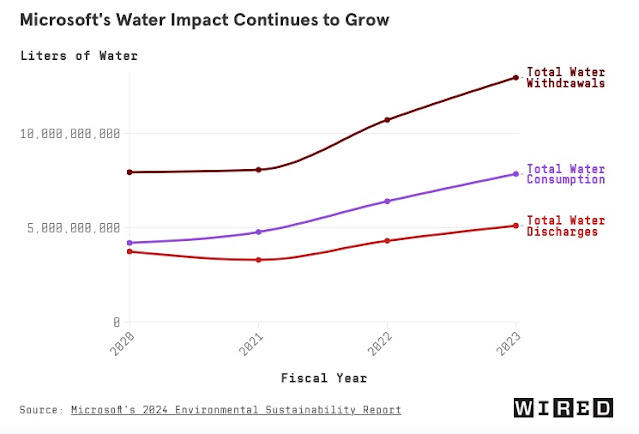
AI, love it or hate it, it's here and isn't going away unless our antiquated power grid surrenders given just how truly inefficient digital is when it comes to processing analog output of neural nets as AI must use analog in order to react to the real world in real time as analog uses differential equations to map the differences in textural, visual and audio data prior to delivering said content to digital systems to process and show a user the best way to check out the 
Grand Canyon.

Remember, digital counts, analog measures.


There is no free lunch 


Friday, November 18, 2016

The Waldo Moment


Black Mirror's take on reality is enlightening, frightening and prescient in looking at tech from a cost perspective, something BRT has done for the past 7 years as There Ain't No Such Thing as a Free Lunch, thanks to the 3 laws of Thermodynamics. In Mirror, The Waldo Moment strikes home when it comes to combining tech with an uneducated populace to give rise to world dictatorship under a "leader" that doesn't exist. Something akin to the rise of Trump, the now soon to be president who should not exist.


Any questions?

Friday, April 05, 2024

The Seventh Seal ...

Illustration by Ricardo Santos

As everyone knows, There Ain't No Such Thing As A Free Lunch applies to every endeavor, including AI, the open ended tech forever to remain unknowable thanks to code writing code in order for said tech to react to the real world in realtime, may soon become the stuff of nightmares but this time, it's a lucid dream civilization is currently having regarding the specter of AI and what it means to the future of mankind.


It gets better

Deep learning powers the most advanced AI systems in the world, from DeepMind’s protein-folding model to large language models (LLMs) like OpenAI’s ChatGPT. No one really understands how deep learning systems work, but their performance has continued to improve nonetheless. These systems aren’t designed to function according to a set of well-understood principles but are instead “trained” to analyze patterns in large datasets, with complex behavior — like language understanding — emerging as a consequence. AI developer Connor Leahy told me, “It’s more like we’re poking something in a Petri dish” than writing a piece of code. The October position paper warns that “no one currently knows how to reliably align AI behavior with complex values.”

Curvature 2018

It's all about the money.

In spite of all this uncertainty, AI companies see themselves as being in a race to make these systems as powerful as they can — without a workable plan to understand how the things they’re creating actually function, all while cutting corners on safety to win more market share. Artificial general intelligence (AGI) is the holy grail that leading AI labs are explicitly working toward. AGI is often defined as a system that is at least as good as humans at almost any intellectual task. It’s also the thing that Bengio and Hinton believe could lead to the end of humanity.

Endgame.

Bizarrely, many of the people actively advancing AI capabilities think there’s a significant chance that doing so will ultimately cause the apocalypse. A 2022 survey of machine learning researchers found that nearly half of them thought there was at least a 10 percent chance advanced AI could lead to “human extinction or [a] similarly permanent and severe disempowerment” of humanity. Just months before he cofounded OpenAI, Altman said, “AI will probably most likely lead to the end of the world, but in the meantime, there’ll be great companies.”

The Seventh Seal

When reading the Jacobin piece, an indirect connect to Ingmar Bergman's The Seventh Seal readily comes to mind as a Disillusioned knight Antonius Block and his cynical squire Jöns return from the Crusades to find the country ravaged by the plague. The knight encounters Death, whom he challenges to a chess match, believing he can survive as long as the game continues.

Death and Antonius Block choose sides for the chess game

At least Death agreed but will AI?