Saturday, August 20, 2022

Out of Kansas


Reading Salmon Rushdie's "review" of The Wizard of Oz is to connect to the mind of a great writer as this is not just a review but rather a singular take on the meaning of life from one filled with wonder and sly wit, characteristics all too rare in the year of our lord 2022.

Perhaps it is because they are all hollow that our imaginations can enter them and fill them up so easily. That is to say, it is their anti-heroism, their apparent lack of Great Qualities, that makes them our size, or even smaller, so that we can stand among them as equals, like Dorothy among the Munchkins. Gradually, however, we discover that, along with their “straight man,” Dorothy (she occupies in this sequence the role of the unfunny Marx Brother, the one who could sing and look hunky and do little else), they embody one of the film’s “messages”—that we already possess what we seek most fervently. The Scarecrow regularly comes up with bright ideas, which he offers with self-deprecating disclaimers. The Tin Man can weep with grief long before the Wizard gives him a heart. And Dorothy’s capture by the Witch brings out the Lion’s courage, even though he pleads with his friends to “talk me out of it.” For this message to have its full impact, however, it is necessary that we learn the futility of looking for solutions outside. We must learn about one more hollow man: the Wizard of Oz himself. Just as the Tinsmith was a flawed maker of tin men—just as, in this secular movie, the Tin Man’s god is dead—so too must our belief in wizards perish, so that we may believe in ourselves. We must survive the Deadly Poppy Field, helped by a mysterious snowfall (why does snow overcome the poppies’ poison?), and so arrive, accompanied by heavenly choirs, at the city gates.

Read Out of Kansas in it;s entirety as you will learn why Rushdie matters. 

Friday, August 19, 2022

The SC's betrayal


The SC's betrayal is more than just apt, it's true. Religion drove the SC to deny a woman's right to choose, not logic, as its war on women as per the great George Carlin rant regarding his take on those who deny a person's right to own their body based on their "faith" no matter what the cost may be.

When I was 11, he impregnated me. I use this active verb, with me as direct object, intentionally. To “get pregnant” suggests he threw the baseball and I, knowing it was coming, caught it. I did not mean to catch anything, nor did I know how to avoid doing so. My mom, who was already worried that something seemed wrong, figured it out. “Are you pregnant?” she asked me. I nodded yes. How did she know? I barely knew. Maybe it was pure motherly intuition.

In 1983, abortion was legal in Utah because it was legal across the United States. I did not feel lucky to get an abortion. I felt like garbage. The babysitter did not have to go to the clinic. The babysitter was not shunned and censured by our community. Most people didn’t even know what he had done, though they seemed to know something bad had happened to me — or perhaps that I had done something wrong. Only my mom and I were subject to the shame of entering that special building for that special procedure. Although no one in the neighborhood or at school talked to me about it, I could feel the electric gossip surge around me. I eventually skipped a grade.

On June 24, I felt the prison gates fall around me, around my daughter, around everyone with a uterus. Pregnancy and childbirth change life trajectories. Now, for many more Americans, trajectories are set. Paths defined. This future is foreseeable. I ask that you look at it.

Gilead beckons thanks to the SC fanatics residing on a once great institution thanks to Trump and Mitch.

Wednesday, August 17, 2022

The suicide machine


Running out of planet applies as overshoot, now falling on July 28, means the resources of earth have already been exhausted circa 2022, which means ... virgin resources must be plundered yet again in order for society and capitalism to continue ever onward without interuption, right? In viewing this pix, one sees consumerism at it's finest but it also shows, in indirect fashion, how civilizations die when natural resources vanish but this time it's different as we have run out of planet and have no place to go while the specter of the extinction event known as global warming looms ever larger as we move further into the 21st century.

Giedi Prime Landscape

Riffin ...


Severance, a guilty pleasure enjoyed by yours truly, is enlivened by Christopher Walken's and John Turturro's possible romance under the questionable auspices of Lumon Industries because To work at Lumon, employees must volunteer for “severance,” a surgical procedure that bifurcates the mind so that the work self — the “innie”— has no knowledge of the home self — the “outie” — and vice versa.

With this in mind, the wry humor of these two resonates without question. :)

“I’ve hardly ever played the guy who gets the girl. Or the guy,” Christopher Walken said. “Romantic, that’s not it. Usually I chop people up or something.”

In the sixth episode, the two men meet in what looks like a greenhouse. They speak softly, their faces and bodies coming closer. They very nearly kiss, until Irving reminds him about the company’s stance on workplace relationships. “This can’t be romantic then?” Burt asks. “Not romantic at all?” A lifetime of yearning — two lifetimes — is concentrated into these few seconds.

Did the actors ever try the scene with a kiss? They did not. “Because I’m so old, it would have been a little bit hard to watch,” Walken said.

“People think that actors talk about motivation and acting,” Walken said. “Mostly they talk about cooking, movies and sometimes girls.”

Turturro had wanted to turn these conversations into a book, “Talkin’ and Walken.” But Walken killed the idea. He didn’t want to hurt the feelings of anyone still living.

They don’t know what the planned second season of “Severance”will mean for these characters or if Burt, who retired from Lumon, will even appear at all. They hope that the relationship will continue, though Walken quashed the idea of any sex scene.

“I always think, would I want to watch this?” he said. “No, so no full frontal.”

They riffed for a while on the idea of Burt and Irving taking a road trip.

One can only hope. :)

Onions rings at grand scale :)


We now are able to see M87 in higher resolution thanks to sophisticated code able to sift through the extensive dataset of the EHT resulting in a photon ring showing the actual outline of M87's super massive black hole. Interestingly, the ring's not a single entity but rather is comprised of many subrings as seen by the image below. 

The M87 image scientists unveiled in 2019 was a landmark, but the researchers felt they could sharpen the image and glean new insights by working smarter, not harder. They applied new software techniques to reconstruct the original 2017 data in search of phenomena that theories and models predicted were lurking beneath the surface. The new, resulting image depicts the photon ring, comprised of a series of increasingly sharp sub-rings, which the team then stacked to get the full image.

the photon ring is the summation of several rings

Supermassive black holes effectively cast a shadow on the light from the hot, glowing gas that surrounds them (leftmost image). Around the shadow lies a bright photon ring. But the photon ring is not a single ring: it’s composed of a series of increasingly sharp subrings. Each subring n is produced by photons that traveled around the black hole n/2 times before reaching the observer (n’s of 0, 1, and 2 shown, left to right). These subrings stack to give the full image.  Michael D. Johnson (CfA) and George Wong (UIUC)

End game.

The result was possible because the EHT is a "computational instrument at its heart," said Broderick, who holds the Delaney Family John Archibald Wheeler Chair at Perimeter. "It is as dependent on algorithms as it is upon steel. Cutting-edge algorithmic developments have allowed us to probe key features of the image while rendering the remainder in the EHT's native resolution."

Click here to read the paper.

Friday, August 12, 2022

Going tactical


Thee's a reason why marginal countries like North Korea want nukes as it make countries like the US give pause when thinking about invading a given country like America did with Nam, Iraq and Afghanistan, entities lacking said tech, thus enabling the US to invade with relative impunity. The problem now is, nukes are going tactical with NK being next in line to having them.

Factoid


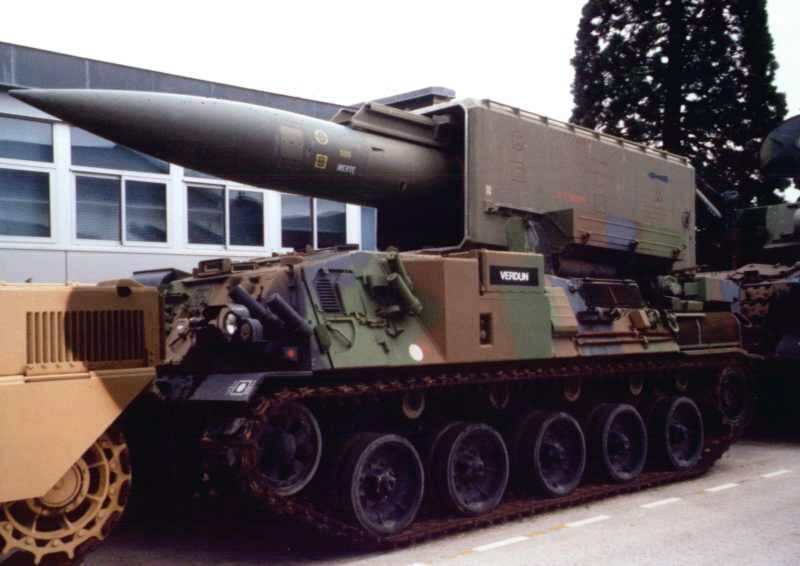
French Pluton missile circa 1970s. Capable of firing a 15 kiloton nuclear warhead a distance of 120 km

Immortality???


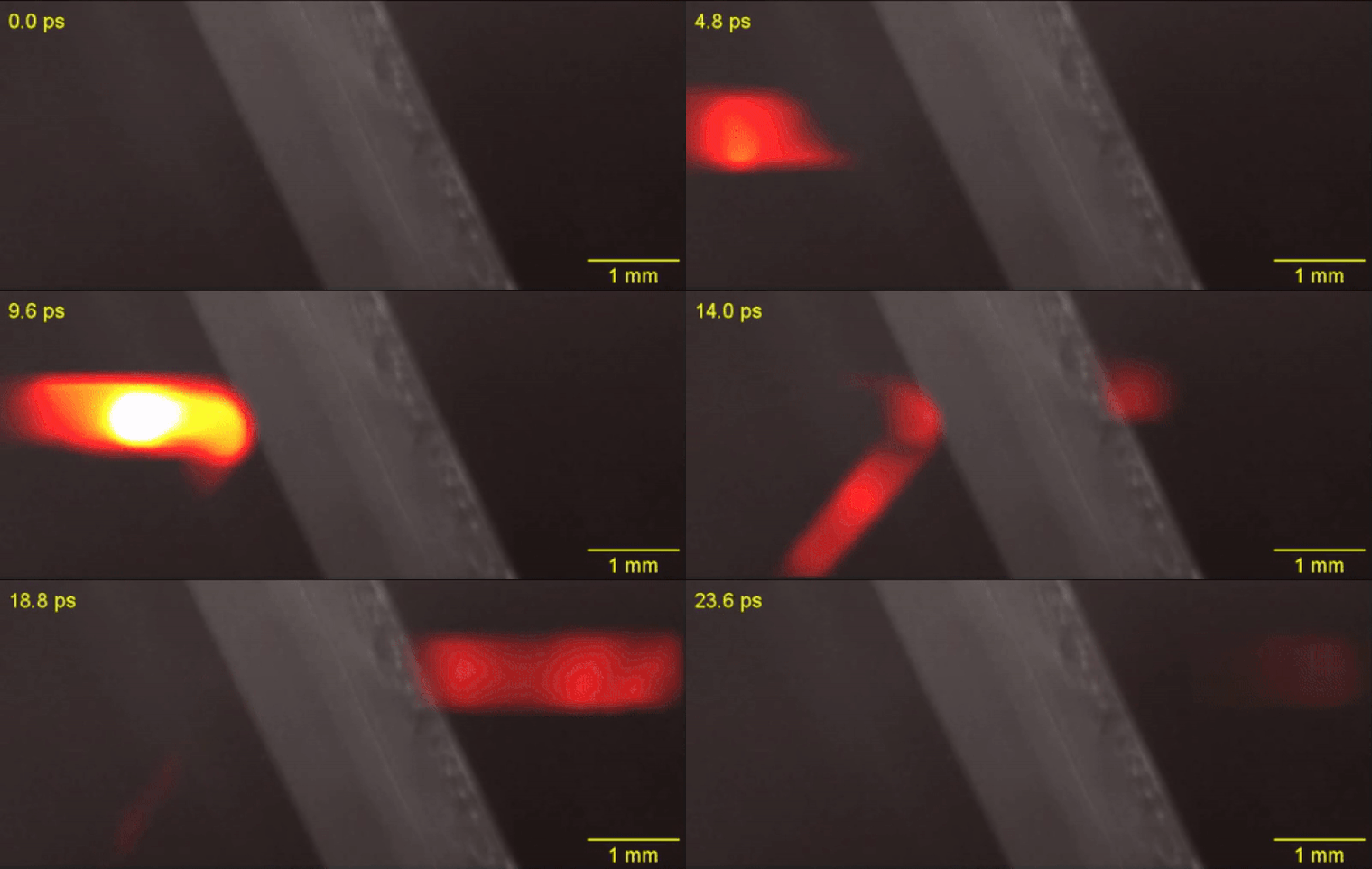
By firing a pulse of light at a semi-transparent/semi-reflective thin medium, researchers can measure the time it must take for these photons to tunnel through the barrier to the other side. Although the step of tunneling itself may be instantaneous, the traveling particles are still limited by the speed of light, and although photons can be absorbed and re-emitted, it's not so easy to destroy photons in any way at all. (Credit: J. Liang, L. Zhu & L.V. Wang, 2018, Light: Science & Applications)

To live forever, a false hope for all constituents of existence save for perhaps one, the photon, the carrier of the electromagnetic force, a massless particle forever traveling at the speed of light in a vacuum. is most likely immortal but then again, is it really?

In the expanding Universe, for billion upon billions of years, the photon seems to be one of the very few particles that has an apparently infinite lifetime. Photons are the quanta that compose light, and in the absence of any other interactions that force them to change their properties, are eternally stable, with no hint that they would transmute into any other particle. But how well do we know this to be true, and what evidence can we point to in order to determine their stability? It's a fascinating question that pushes us right to the limits of what we can scientifically observe and measure.

The Red Shift beckons ...

unreachable

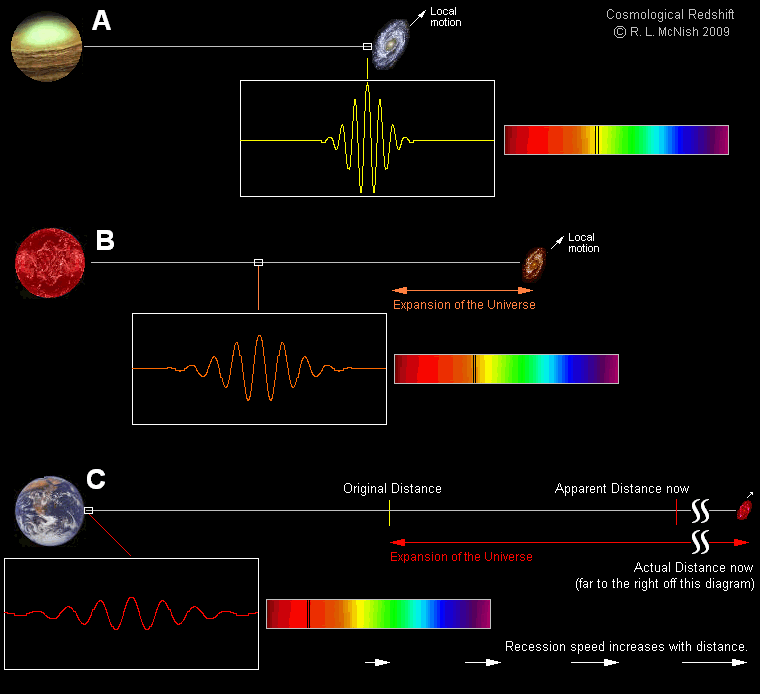
The farther a galaxy is, the faster it expands away from us and the more its light appears redshifted. A galaxy moving with the expanding Universe will be even a greater number of light years away, today, than the number of years (multiplied by the speed of light) that it took the light emitted from it to reach us. But we can only understand redshifts and blueshifts if we attribute them to a combination of motion (special relativistic) and the expanding fabric of space (general relativistic) contributions both. If the light simply got “tired” instead there would be a differing series of observable consequences. Credit: Larry McNish/RASC Calgary)

black hole

Hence ... photons live on.

End result?


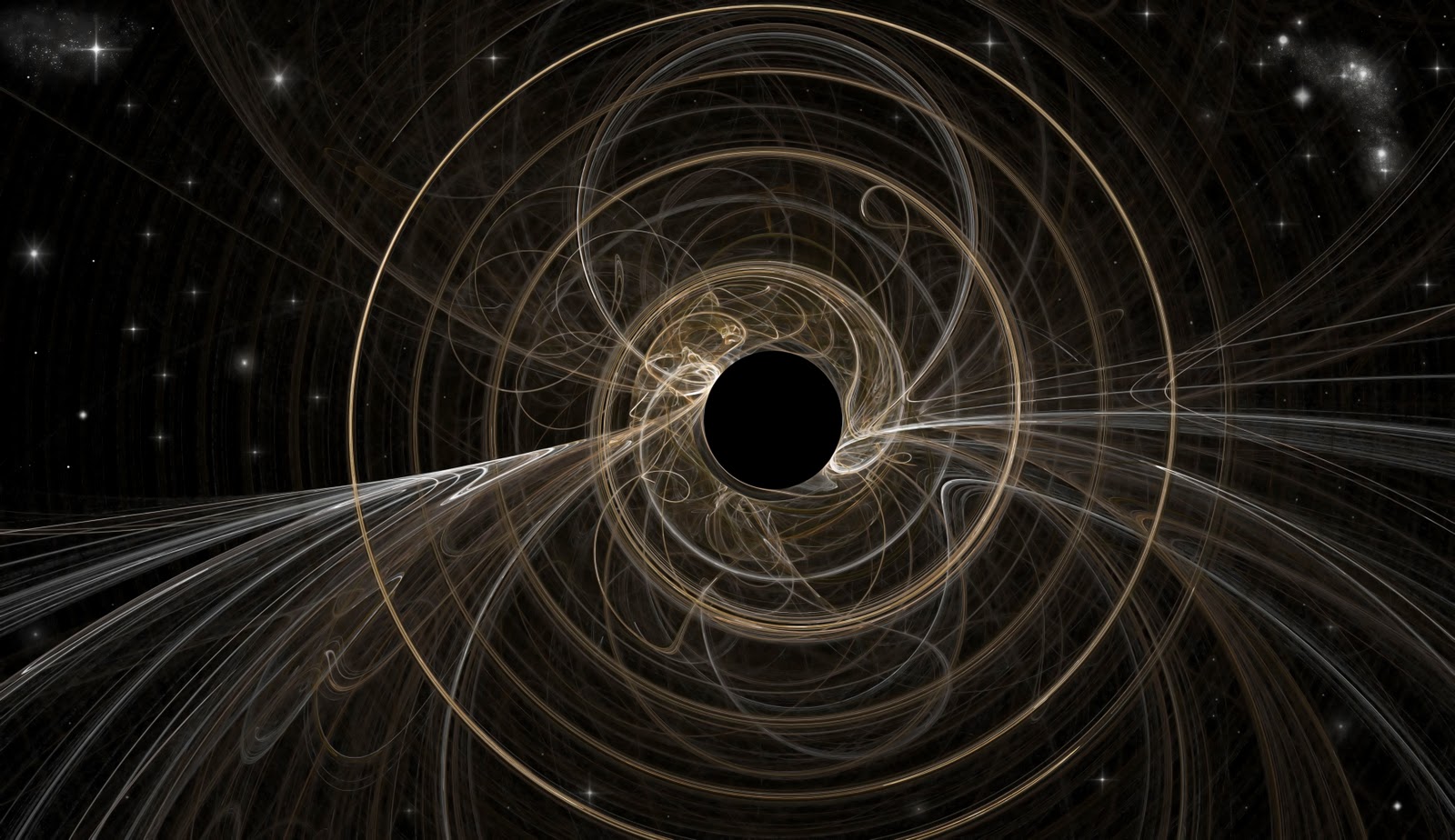
Because the Universe still has dark energy in it. Just as an object with an event horizon, like a black hole, will continuously emit photons due to the difference in acceleration close to versus far away from the event horizon, so too will an object with a cosmological (or, more technically, a Rindler) horizon. Einstein’s equivalence principle tells us that observers cannot tell the difference between gravitational acceleration or acceleration due to any other cause, and any two unbound locations will appear to accelerate relative to one another owing to the presence of dark energy. The physics that results is identical: a continuous amount of thermal radiation gets emitted. Based on the value of the cosmological constant we infer today, that means a blackbody spectrum of radiation with a temperature of ~10–30 K will always permeate all of space, no matter how far into the future we go.

Immortality it is ... for now. :)

Thursday, August 11, 2022

Autodidact


Yours truly is an autodidact regarding graphics, design and writing as interest in all three were too enticing to not pursue said disciplines on my own. Seems the brain does this naturally as one must observe, orient, decide and act continuously, as per the OODA loop and it's deep connect to Godel's Incompleteness theoreems and Heisenberg's Uncertainty Principle as the only constant in reality is change and in order to survive, one must continually adapt in real time or die.

Now, it's AI's turn ...

For researchers interested in the intersection of animal and machine intelligence, moreover, this “supervised learning” might be limited in what it can reveal about biological brains. Animals — including humans — don’t use labeled data sets to learn. For the most part, they explore the environment on their own, and in doing so, they gain a rich and robust understanding of the world.

Now some computational neuroscientists have begun to explore neural networks that have been trained with little or no human-labeled data. These “self-supervised learning” algorithms have proved enormously successful at modeling human language and, more recently, image recognition. In recent work, computational models of the mammalian visual and auditory systems built using self-supervised learning models have shown a closer correspondence to brain function than their supervised-learning counterparts. To some neuroscientists, it seems as if the artificial networks are beginning to reveal some of the actual methods our brains use to learn.

And so it begins. - K Vonnegut

Tuesday, August 09, 2022

Much ado about nothing

 A black-and-white illustration in which two teams of eight horses pull in opposite directions as spectators look on

A 1672 book about the vacuum by the German scientist Otto von Guericke depicts a demonstration he gave for Emperor Ferdinand III, in which teams of horses tried unsuccessfully to pull apart the halves of a vacuum-filled copper sphere. Royal Astronomical Society/Science Source

Much ado about nothing not only applies to Shakespeare's comedy but also about reality as learning about the varieties of nothing is a big deal without question.

Since then, the vacuum has become a bedrock concept in physics, the foundation of any theory of something. Von Guericke’s vacuum was an absence of air. The electromagnetic vacuum is the absence of a medium that can slow down light. And a gravitational vacuum lacks any matter or energy capable of bending space. In each case the specific variety of nothing depends on what sort of something physicists intend to describe. “Sometimes, it’s the way we define a theory,” said Patrick Draper, a theoretical physicist at the University of Illinois.

As modern physicists have grappled with more sophisticated candidates for the ultimate theory of nature, they have encountered a growing multitude of types of nothing. Each has its own behavior as if it’s a different phase of a substance. Increasingly, it seems that the key to understanding the origin and fate of the universe may be a careful accounting of these proliferating varieties of absence.