Wednesday, October 06, 2021

LEO ...

Creepy says it all but you and I already know that, right?

By using a hybrid movement that is somewhere between walking and flying, the researchers get the best of both worlds in terms of locomotion. LEO's lightweight legs take stress off of its thrusters by supporting the bulk of the weight, but because the thrusters are controlled synchronously with leg joints, LEO has uncanny balance.

"Based on the types of obstacles it needs to traverse, LEO can choose to use either walking or flying, or blend the two as needed. In addition, LEO is capable of performing unusual locomotion maneuvers that even in humans require a mastery of balance, like walking on a slackline and skateboarding," says Patrick Spieler, co-lead author of the Science Robotics paper and a former member of Chung's group who is currently with the Jet Propulsion Laboratory, which is managed by Caltech for NASA.

In other words ...

LEO is still a prototype—a kind of proof-of-concept to see if a bipedal flying robot can perform tasks that would otherwise be difficult or impossible for ground robots or aerial drones to accomplish on their own. In the future, a full-fledged version could be tasked with difficult or dangerous jobs, such as inspecting and repairing damaged infrastructure, installing new equipment in hard-to-reach places, or attending to natural disasters and industrial accidents. Eventually, a LEO-like robot could even transport delicate equipment to the surface of a celestial body, such as Mars or Saturn’s moon Titan. More ominously, the agile bipedal flier could be used in defense or warfare.

LEO, equipped with AI and weapons ... what could possibly go wrong?

Random Shots/rev XX


G&B - Asymmetry Study 42


Stratocumulus 101


Early Fall


G&B Pano


Mirror Mirror


A Perfect Early Fall Day

Tuesday, October 05, 2021

Problem solving 101


The National Lampoon ... RIP


It's all about death, drugs, sex, politics and bad taste with the sadly defunct National Lampoon, a sorely missed commentator on the insanity of America as the kind of humor circa 2021 lacks the intelligent and biting satire of this unique institution. I write about this because of viewing the hilarious documentary Drunk Stoned Brilliant Dead last night. 


Bad taste but accurate rules as no one was immune to the National Lampoon. 
Molière, IMHO, would have approved its take on America without question.

Monday, October 04, 2021

Grifters one & all


Anger comes to mind when listening to pols resisting the eminently logical concept of demanding the rich to pay their fair share of taxes while government protects their asses and allows them to continue to make money as needs warrant. Defies all logic but then again, the system is gamed for the rich as it's all about the money, always has been, always will be.

US Denounced as 'Biggest Peddler of Financial Secrecy' After Pandora Papers Leak

"U.S. President Biden must match his own rhetoric on shutting down global illicit finance, and start with the biggest offender—his own country."

The leak of an enormous trove of tax haven files over the weekend offered a further glimpse into the secretive world of offshore finance—a system facilitated by the U.S. and other rich nations—and prompted calls for immediate changes to global rules that let the powerful hide their wealth, skirt their obligations, and starve governments of crucial revenue.

"This is where our missing hospitals are," Susana Ruiz, the tax policy lead at Oxfam International, said in a statement. "This is where the pay-packets sit of all the extra teachers and firefighters and public servants we need. Whenever a politician or business leader claims there is 'no money' to pay for climate damage and innovation, for more and better jobs, for a fair post-Covid recovery, for more overseas aid, they know where to look."

"The biggest blockers to transparency are the U.S. ... and the U.K., the leader of the world's biggest tax haven network."

"Tax havens cost governments around the world $427 billion each year," Ruiz added. "That is the equivalent of a nurse's yearly salary every second of every hour, every day. Ordinary taxpayers have to pick up the pieces. Developing countries are being hardest hit, proportionately. Corporations and the wealthiest individuals that use tax havens are out-competing those who don't. Tax havens also help crime and corruption to flourish."

How much?


In 2012, we published an update with a substantially more rigorous methodology: The Price of Offshore, Revisited. Here, James Henry – one of our senior advisers and the widely published former chief economist for McKinsey’s – utilises four different approaches to make the most of the available data, and provide a more robust estimate than any previous: some $21 trillion to $32 trillion.

Grifters one & all

The real owners ...


The real owners ...


Sunday, October 03, 2021

Friday, October 01, 2021

Suicide is painless ...


Bethlehem Steel RIP

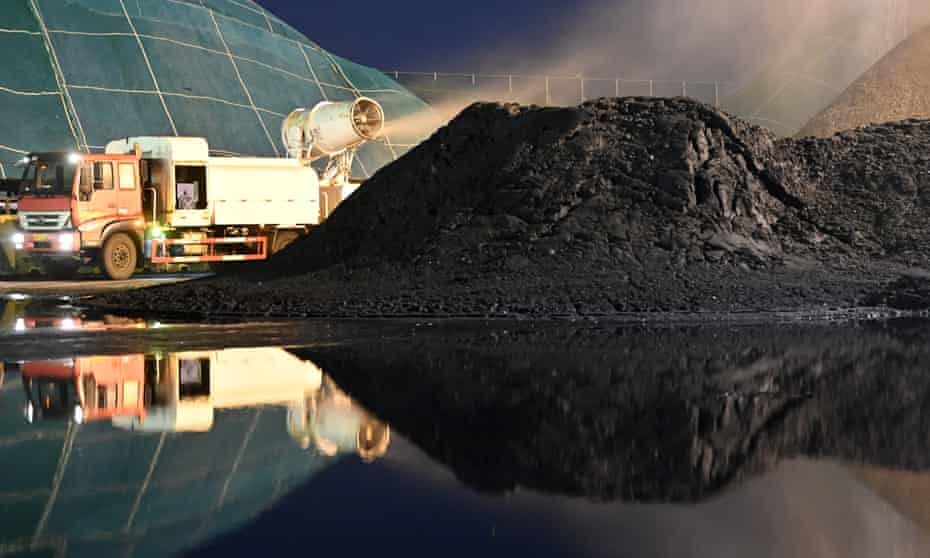
China needs energy, now, as without it, growth becomes impossible. Now let's think about this, growth, aka capitalism, means nature as profit center does it not? Only a great catastrophe will change how man does business on this planet vis a vis global warming as it's about the money no matter what the cost may be.


Addendum: China's building new coal plants to ameliorate the energy crunch as coal is one resource China has to the max. 


"Moon, Turn The Tides... Gently, Gently Away" - Jimi Hendrix


 Luns's slowly leaving us but we won't notice her departure for a very long time.

The moon is drifting away from us.

Each year, our moon moves distinctly, inexorably farther from Earth—just a tiny bit, about an inch and a half, a nearly imperceptible change. There is no stopping this slow ebbing, no way to turn back the clock. The forces of gravity are invisible and unshakable, and no matter what we do or how we feel about them, they will keep nudging the moon along. Over many millions of years, we’ll continue to grow apart.

The moon used to be closer. When it first formed, about 4.5 billion years ago, molded out of rocky debris that had been floating around Earth, the moon orbited 10 times nearer to the planet than it does today. The debris, scientists believe, had come from a collision between Earth and a mysterious Mars-sized object. Fresh out of the cosmic oven, the moon was hot and molten, glowing red in the night sky. Back then, scientists say, the moon was moving away at a rate of about eight inches per year.

Our planet and its moon were always going to grow apart like this. The gravity of moons, small as they are in comparison, can still tug at their planets, causing the larger worlds to bulge outward a little bit. On an ocean-covered planet like ours, the effect shows up in the shifting tides. The moon pulls at our oceans, but those oceans pull back, making the moon speed up in its orbit. And “if you speed up while orbiting Earth, you are escaping Earth more successfully, so you orbit from a farther distance,” James O’Donoghue, a planetary scientist at JAXA, Japan’s space agency, explained to me. Scientists refer to this phenomenon as “lunar retreat”—a delightful term, as I’d prefer to imagine the moon enjoying itself at a relaxing getaway, bending its rocky body into various yoga poses, rather than slowly ghosting Earth.

"Moon, Turn The Tides... Gently, Gently Away" - Jimi Hendrix: Electric Ladyland